How IP and TVI cameras differ
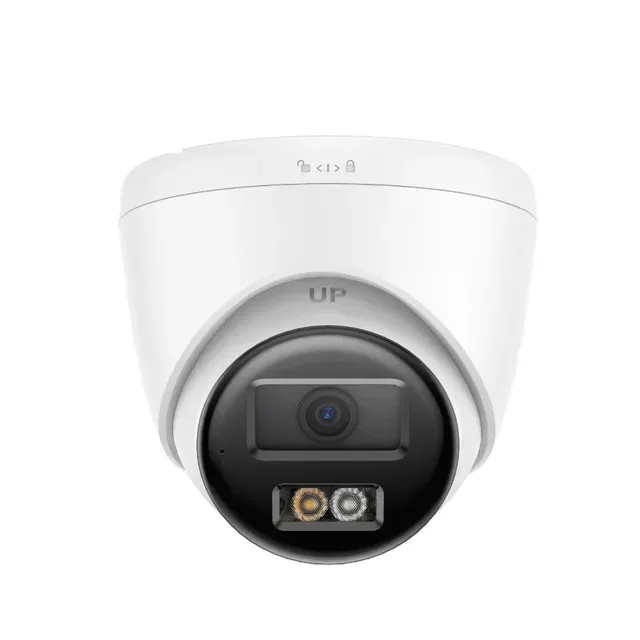
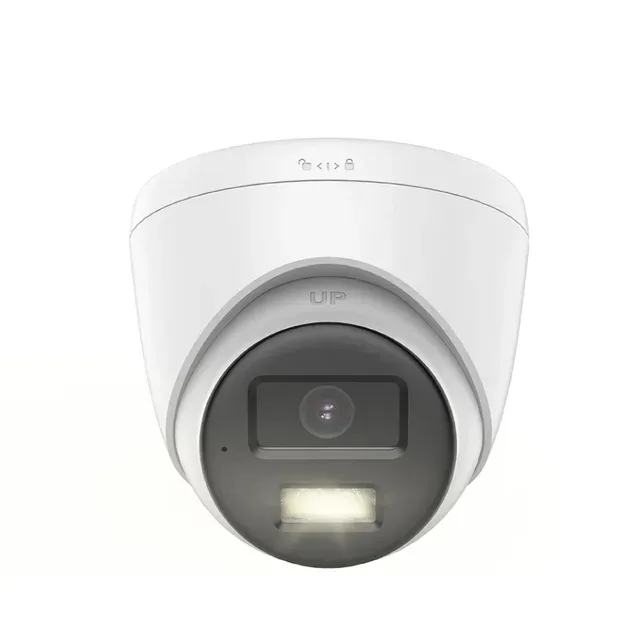
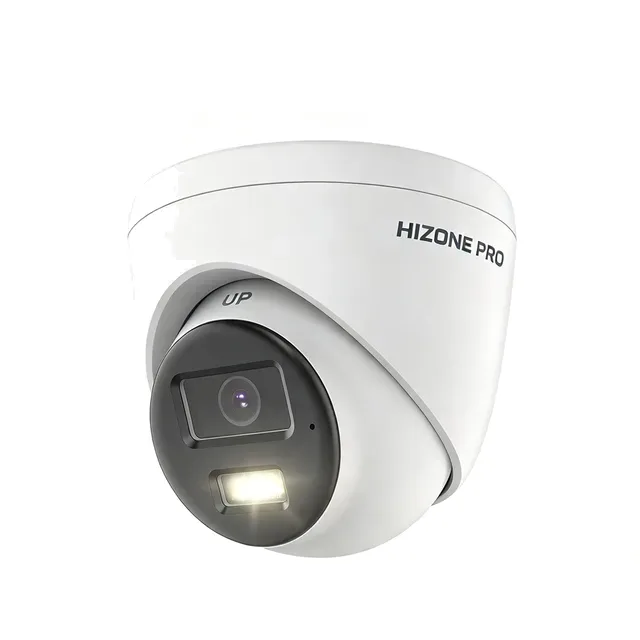
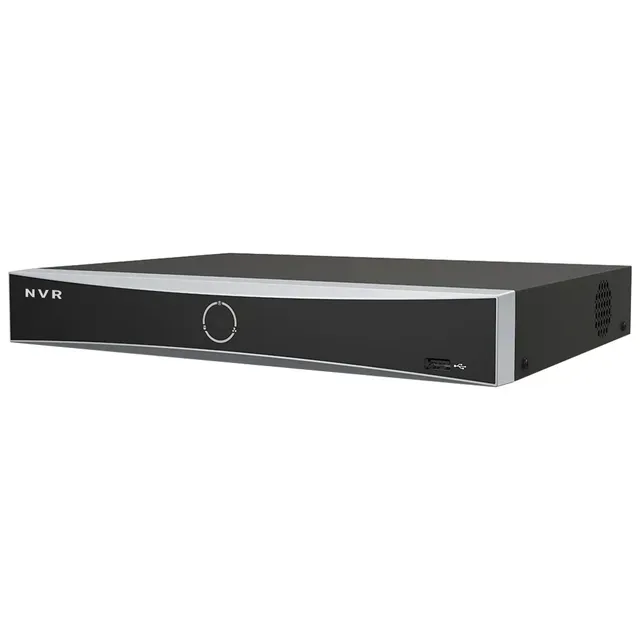
An IP camera is a small networked computer. It processes and compresses its own image, then sends a digital video stream over an Ethernet cable to a network video recorder (NVR). Because it works on a network, each camera has an IP address and can run its own detection, audio and storage features.
A TVI camera is an HD analogue camera. HD-TVI is a transmission standard that carries high-definition video along coaxial cable to a digital video recorder (DVR), which does the compression and recording. TVI cameras are simpler devices, and the recorder does most of the work.
Both types record high-resolution footage and both work with the Hikvision platform. HiZone Pro IP cameras work on Hikvision and HiLook NVRs, and HiZone Pro TVI cameras work on Hikvision and HiLook DVRs, so the choice usually comes down to the cable you have or plan to run.
Cabling: network cable or coax
IP cameras use CAT5e or CAT6 network cable with RJ45 connectors. A single run of Ethernet can be up to 100 metres between the camera and the recorder or switch. Beyond that you need a switch part way along the run. Network cable is thin, easy to pull through walls and widely understood by electricians and installers.
TVI cameras use coax with BNC connectors, normally with a separate pair of power cores alongside. Our HD BNC and DC cables combine both in one lead in 5 m, 10 m and 20 m lengths. If the building already has coax from an old analogue system, a TVI camera can often reuse it.
TVI signals can also run over network cable using passive video baluns at each end. This is useful when you want to keep a DVR but the cable route is easier with CAT5e or CAT6.
Power: PoE or 12V DC
Most IP cameras take power over Ethernet (PoE), so one cable carries both data and power. Standard PoE (IEEE 802.3af) delivers around 15.4 W per port and PoE+ (802.3at) around 30 W. Our NVR1204-4 and NVR1208-8P recorders have 4 and 8 built-in PoE ports, and our 4-port and 8-port PoE switches support 802.3af/at with up to 30 W per port.
TVI cameras run on 12V DC. Each camera needs a power feed, either from a plug-in supply with a splitter lead or from a central power box. Our 12V power boxes have 9 or 18 outputs at 1.1 A each, which keeps a multi-camera system tidy and protects each output individually.
Resolution and features compared
Both technologies now reach 4K. The table shows the HiZone Pro cameras we supply in each type. IP gives you the widest range of resolutions, including 12MP, and on-board SD card storage. TVI gives you 5MP and 4K with ColorVu full-colour night imaging and audio over coax.
- Our IP turrets support human detection, and the IPT250 and IPT280 models add vehicle detection.
- Our IP turrets have an SD card slot for up to 512 GB of on-board storage as a backup to the recorder.
- Our TVI turrets carry audio over the coax, and the -HT models have a built-in speaker for two-way audio.
| Model | Type | Resolution (pixels) | Night light range |
|---|---|---|---|
| IPT240B | IP | 2560 × 1440 (4MP) | IR 20 m, white light 15 m |
| IPT250W-HT / IPT250B-HT | IP | 3072 × 1728 (3K) | Up to 30 m |
| IPT280W-HT / IPT280B-HT | IP | 3840 × 2160 (4K) | Up to 30 m |
| IPT2120W-HT / IPT2120B-HT | IP | 4096 × 3072 (12MP) | Up to 30 m |
| T159W-HS / T159B-HS-1 | TVI | 2960 × 1665 (3K) | IR 30 m, white light 20 m |
| T259W-HT / T259B-HT | TVI | 2960 × 1665 (5MP) | IR 40 m, white light 40 m |
| T289W-HT / T289B-HT | TVI | 3840 × 2160 (4K) | IR 40 m, white light 40 m |
When IP is the better choice
- New builds, extensions and refurbishments where cables are being run from scratch.
- Systems that need 12MP cameras or the widest choice of resolutions.
- Sites where one cable per camera for power and data keeps the installation simple.
- Larger systems that may grow later, since you can add a PoE switch and extend the network.
- Businesses that want camera-side detection and on-board SD storage as a fallback.
When TVI is the better choice
Our T259 and T159 TVI cameras have a switchable output (TVI, AHD, CVI or CVBS), which helps when the existing recorder uses a different analogue format.
- Buildings with existing coax from an older CCTV system that is in good condition.
- Upgrades where lifting floors or chasing walls would be costly or disruptive.
- Sites where an existing Hikvision or HiLook DVR is staying, as TVI cameras connect straight to it.
- Anyone who wants full-colour ColorVu night imaging up to 40 m on a coax system.
Mixing IP and TVI with a hybrid DVR
One technology for the whole site is optional. Our six AcuSense hybrid DVRs accept HD-TVI, AHD, CVI, CVBS and IP inputs. You can keep coax cameras where the cable already exists and add IP cameras on new runs, all on one recorder and one app.
Check the IP camera limit of the recorder before you mix. Our 3K hybrid DVRs accept IP cameras up to 6MP, and our 4K hybrid DVRs accept IP cameras up to 8MP. For 12MP IP cameras, use one of our NVRs.
Choose your cameras and get them fitted
If you are cabling from scratch, start with our IP cameras and an NVR with built-in PoE. If you have coax already, look at our TVI cameras and hybrid DVRs. The camera planner lets you put cameras, a recorder and the right accessories into one basket, and our trade team can help with larger or mixed systems.
We supply equipment only. If you want the system fitted, we can put you in touch with one of our recommended installers.