Why the cable matters more with PoE
An IP camera on PoE takes both its data and its power from one network cable. Data is forgiving, because a camera stream needs only a few megabits per second. Power is less forgiving. Every metre of cable has resistance, and resistance turns some of the power into heat and lowers the voltage at the camera.
On a short run almost any cable works. On a long run, in a warm loft or bundled with other cables, a poor conductor can leave a camera short of power. The usual symptoms are cameras that reboot at night when their infrared or white light switches on, or cameras that fail to start at all.
CAT5e vs CAT6 for CCTV
Both categories carry PoE and both are specified to 100 m. The differences are in bandwidth, construction and conductor size.
- CCTV cameras connect at 10/100 Mbps, and our PoE switches and the PoE ports on our NVRs are 10/100 Mbps, so CAT5e has more data capacity than a camera needs.
- The real gain from CAT6 for CCTV is its thicker conductors, which lower resistance and voltage drop on long PoE runs.
- CAT5e is smaller and easier to fit through tight holes and existing conduit.
| CAT5e | CAT6 | |
|---|---|---|
| Rated bandwidth | 100 MHz | 250 MHz |
| Network speed | Up to 1 Gbps at 100 m | 1 Gbps at 100 m, 10 Gbps over shorter runs |
| Conductor size | Usually thinner | Usually thicker |
| Cable diameter | Smaller, easier to pull | Larger, stiffer |
| Best use in CCTV | Most camera runs | Long PoE runs and higher-power devices |
Solid copper vs CCA
CCA cable has an aluminium core with a thin copper coating. It is cheaper and lighter, but aluminium has noticeably higher electrical resistance than copper. That means more voltage drop and more heat when power travels down it.
For PoE camera runs, solid copper is the safer choice. It delivers more of the switch's power to the camera, runs cooler in bundles and holds up better at terminations, where aluminium is more brittle and prone to breaking if flexed. Category cable standards (TIA-568) call for copper conductors, so CCA is sold as an economy alternative.
CCA still has a place on short, low-power runs and budget jobs where every camera is close to the switch. If you are unsure, or a run is long, choose solid copper.
Our 305 m outdoor cable range compared
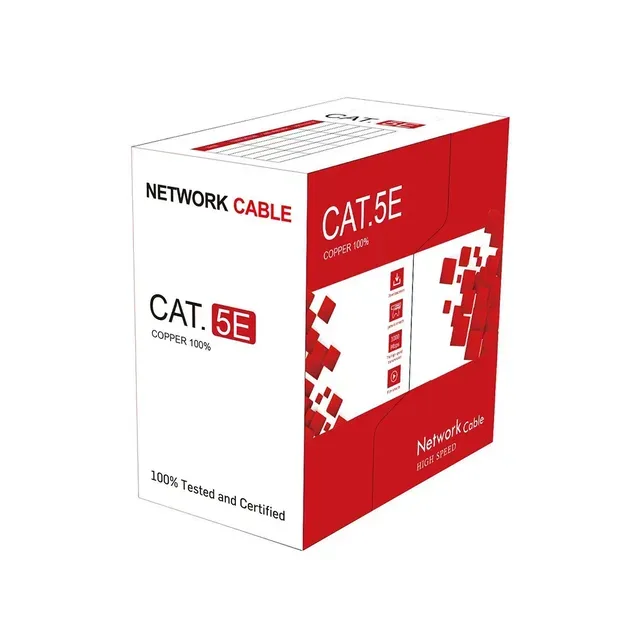
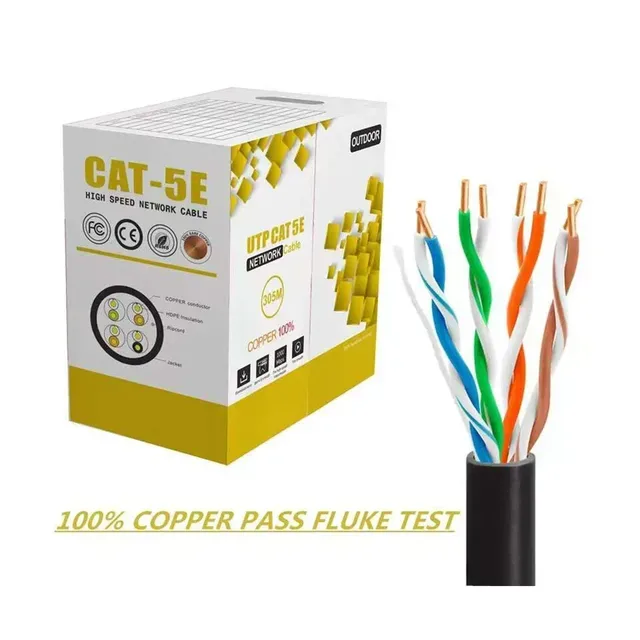
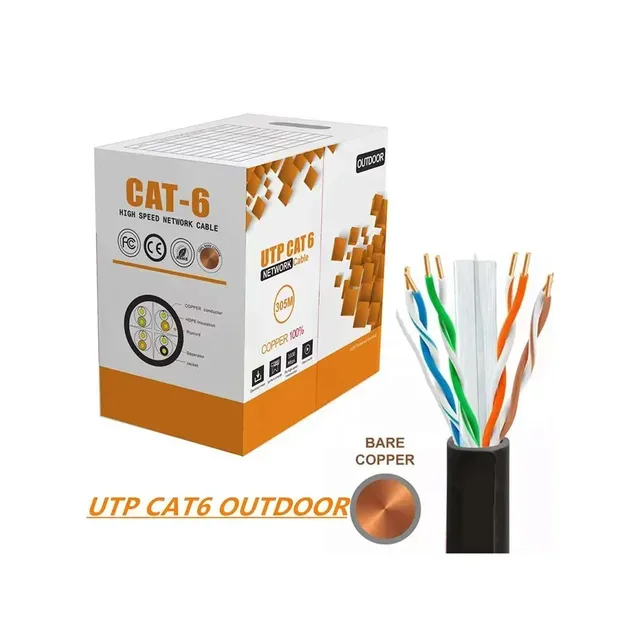
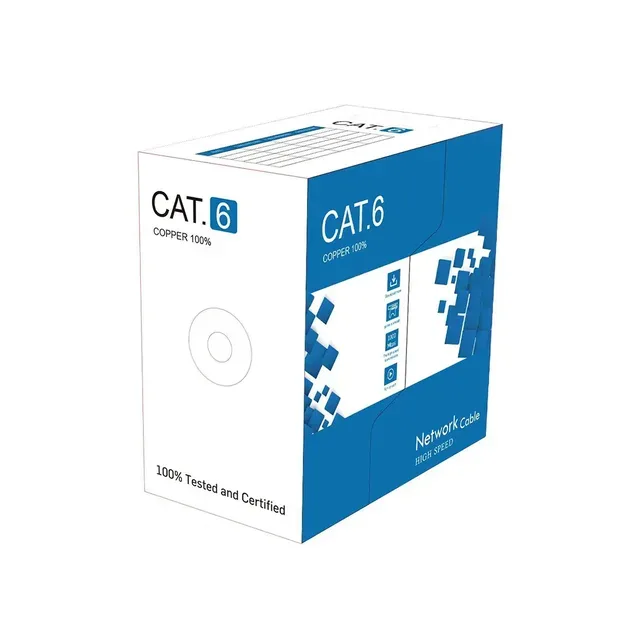
All six of our network cables come on 305 m rolls and are outdoor cables, listed for CCTV, 10BASE-T and 100BASE-TX Ethernet and PoE.
- A thicker solid copper conductor has lower resistance, so the premium cables give the most headroom on long runs.
- For most homes with runs under about 50 m, HA-CAT5E-ECOPPER or HA-CAT5E-COPPER is a sensible choice.
- For runs approaching 100 m, or several cameras on one switch in a warm space, choose HA-CAT6-COPPER.
| SKU | Category | Conductor | Conductor diameter | Best for |
|---|---|---|---|---|
| HA-CAT5E-ECONOMIC | CAT5e | Solid CCA | 0.48 mm | Short, low-power runs on a budget |
| HA-CAT5E-ECOPPER | CAT5e | Solid copper | 0.45 mm | General PoE camera runs |
| HA-CAT5E-COPPER | CAT5e premium | Solid copper | 0.48 mm | PoE runs where a slim cable helps |
| HA-CAT6-ECONOMIC | CAT6 | Solid CCA | 0.53 mm | Short runs where CAT6 is specified |
| HA-CAT6-ECOPPER | CAT6 | Solid copper | 0.50 mm | Longer PoE runs |
| HA-CAT6-COPPER | CAT6 premium | Solid copper | 0.53 mm | Long PoE runs, intercoms, demanding jobs |
Outdoor runs, patch leads and terminations
Use outdoor cable for any section that runs outside. Outdoor cable normally has a polyethylene (PE) jacket, which resists sunlight and moisture far better than the PVC jacket on indoor cable. Clip it neatly, keep it away from mains cables where possible and use a weatherproof camera base or junction box where it enters the camera, such as our TR13, DM21 or universal round junction boxes.
Keep the whole link from switch to camera within 100 m, including patch leads. Our 20 m patch cables, HA-LAN20W and HA-LAN20B, are CAT5e CCA leads for short connections, such as linking an NVR to a router or a switch to a recorder. For long PoE camera runs, terminate solid copper cable from the roll instead.
Measure each route before you order, including the drop down the wall, the run through the loft and the slack you leave at each end. A 305 m roll covers several typical home camera runs. Once each cable is terminated, check it with a cable tester before you fit the camera. A single miswired or loose pair can stop PoE working or drop the link to 10 Mbps, and it is far easier to fix before the camera is on the wall.
Using network cable for TVI cameras
Network cable also suits TVI cameras when paired with video baluns. Our HA-B420 and HA-B820 passive baluns carry HD-TVI, CVI, AHD and CVBS video over UTP CAT5e or CAT6 and need no power. The premium HA-B820 versions add built-in surge protection and 60 dB crosstalk and noise immunity. The camera still needs 12 V power, which you can send down spare pairs or supply locally from one of our CCTV power supplies or power boxes.
Which cable to buy
Add your cable, cameras and recorder to the camera planner and send your order. We do not install. We can introduce you to an installer from our recommended panel if you would like the cabling done for you.
- IP cameras on PoE, typical home runs. HA-CAT5E-ECOPPER or HA-CAT5E-COPPER.
- Long PoE runs or busy switches. HA-CAT6-COPPER or HA-CAT6-ECOPPER.
- Short runs on a tight budget. HA-CAT5E-ECONOMIC or HA-CAT6-ECONOMIC.
- TVI cameras over network cable. Any of the above with HA-B420 or HA-B820 baluns.